Biggest Msi Cubi Nuc 1M Buying Mistakes (And How to Avoid Them)
The Msi Cubi Nuc 1M is one of the compact mini-PC options that appeals to buyers who need a small footprint, modest power consumption, and flexible deployment options. Its size and feature set make it attractive for home offices, digital signage, media centers, and light workstation tasks. Yet many purchasers make predictable mistakes that lead to disappointment: insufficient performance for the intended workload, thermal throttling, wrong I/O expectations, and confusion between "barebone" and fully configured units. This article walks through common buying errors, presents a detailed analysis of the Msi Cubi Nuc 1M in practical use, offers a comparison with similar mini-PCs, and provides a buyer’s guide with concrete, actionable checks before purchase.
Introduction: Why the Msi Cubi Nuc 1M Draws Attention
Mini PCs like the Msi Cubi Nuc 1M target buyers who value compact design, low noise, and reasonable compute power in a tiny package. In many deployments — small business point-of-sale terminals, classroom computers, lightweight desktop replacements, and home theater PCs (HTPCs) — such devices deliver excellent value. However, expectations calibrated for full-size desktops or gaming laptops can lead to frustration. Understanding the product's strengths and limitations reduces risk and ensures the device aligns with intended real‑world use cases.
Detailed Product Review and Analysis
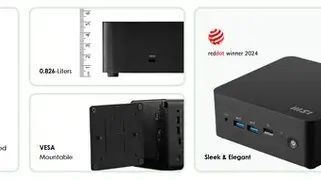
The Msi Cubi Nuc 1M typically offers an ultra-compact chassis, support for low‑power Intel processors, dual-channel SO‑DIMM RAM slots, and M.2 NVMe and/or 2.5" SATA storage options depending on configuration. It often packs enough ports for common peripherals — multiple USB 3.0 ports, HDMI and DisplayPort outputs, Ethernet, and a 3.5mm audio jack. Onboard Wi‑Fi and Bluetooth modules are common in modern configurations.
Performance profile: the device excels at office productivity (web browsing, office suites, light photo editing), media playback (4K video decoding on hardware-enabled codecs), and background server tasks (file sharing, light containerized services). It is not a replacement for a desktop workstation with high single-threaded or GPU-accelerated workloads, and gaming performance is limited unless paired with a discrete GPU or high‑end integrated graphics CPU model (if available).
Thermals and acoustics: compact systems have constrained airflow. MSI’s implementation usually focuses on passive or modest active cooling. Under sustained CPU load the device can run warm and may throttle to keep temperatures in check. For low to moderate bursts of activity the cooling is acceptable and the fan noise remains low; prolonged heavy workloads are where throttling and noise can become noticeable.
Upgradability and serviceability: the Msi Cubi Nuc 1M is often offered as a barebone unit (chassis + motherboard + power) which requires the buyer to install RAM, storage, and OS. In other cases the unit is sold as a fully configured appliance. Access to SO‑DIMM slots and an M.2 slot is usually straightforward via a bottom panel, but space for a 2.5" drive depends on the exact chassis revision. Buyers should verify the internal layout and expansion options for the specific SKU.
Software and driver support: MSI provides BIOS updates and drivers on its support site, but availability varies by region and model. The device works well with Windows and many Linux distributions; however, Wi‑Fi or Bluetooth modules tied to specific regulatory regions or unusual chipsets may require extra driver work on Linux. For commercial deployments, management and VESA mounting capability are important for tidy installations.
Real-world Use Cases
- Home office workstation: Running office suites, multiple browser tabs, video calls, and light multitasking. The Cubi Nuc 1M is compact and quiet for a desk setup.
- Digital signage and kiosks: Continuous video playback and browser-based interfaces. The small size and VESA mount compatibility make it suited for behind-display installation.
- Media center / HTPC: 4K streaming and local media playback leveraging hardware decoding; the device can be tucked behind a TV or inside an AV cabinet.
- Edge server / IoT gateway: Low-power background services, local caching, and lightweight virtualization or container hosting for small teams.
- Education labs: Standardized deployments for labs or classrooms where space, noise, and manageability are priorities.
Top Buying Mistakes and How to Avoid Them
Mistake 1 — Assuming All Mini‑PCs Perform Equally
Mini‑PCs vary dramatically by CPU generation, TDP, and thermal design. The Cubi Nuc 1M is optimized for low-power workloads. Expect reasonable productivity and media performance but not sustained heavy compute. To avoid this mistake, match CPU benchmarks and real-world tests with intended tasks (single-threaded apps, compile times, or video encoding workloads).
Mistake 2 — Overlooking Cooling and Thermal Throttling
Compact designs mean less thermal headroom. Buyers who plan long-running, CPU‑intensive tasks should verify sustained performance figures and reviews that include thermal stress tests. Consider models with higher TDP cooling or external ventilation in the deployment area. If the intended use requires continuous high utilization, a small form factor desktop or a fan-optimized mini-PC is a safer choice.
Mistake 3 — Confusing Barebone vs Fully Configured Units
Barebone units require RAM, storage, and sometimes a Wi‑Fi module to be added. Buying a barebone when a pre-configured unit was expected leads to returns and extra expenses. Carefully read listings: if the listing uses terms like "barebone" or "kit," plan for additional component procurement and installation.
Find top-rated Laptops & Computers products at great prices.
See Deals →Mistake 4 — Ignoring I/O and Display Versioning
DisplayPort and HDMI versions determine resolution, refresh rate, and feature support (HDR, HDCP). Buyers planning multi‑monitor setups or high-refresh displays must confirm port specs. Verify the Ethernet speed and number of USB ports against peripheral needs, and check whether the audio output supports the required formats.
Mistake 5 — Underestimating Storage and RAM Needs
Configurations with small SSDs and minimal RAM hinder performance quickly. For multitasking and responsive workflows, prioritize at least 8–16 GB of RAM and NVMe storage for OS and primary applications. If a 2.5" bay is present and a larger capacity drive is needed, verify that the installation is supported by the chosen SKU.
Mistake 6 — Expecting Desktop‑Class Graphics
Integrated graphics on low‑power Intel CPUs are efficient for video playback and basic editing, but not for demanding 3D games or GPU‑accelerated workloads. If GPU performance matters, look for models that offer discrete GPU support or choose a different class of machine.
Mistake 7 — Neglecting OS Licensing and Image Management
When deploying many units (classrooms, offices), OS licensing costs, domain join procedures, and image deployment are often overlooked. For Windows deployments, plan for license keys and volume licensing. For Linux deployments, verify driver support and plan configuration management (e.g., imaging tools or configuration management systems).
Mistake 8 — Failing to Check Warranty and Local Support
Warranty terms, international support, and shipping for repairs vary. For business-critical installations, ensure adequate warranty length and options for onsite or advance replacement. Confirm local service centers or authorized resellers to minimize downtime.
Pros & Cons
- Pros
- Small footprint and VESA mount compatibility make for clean, space-saving deployments.
- Low power consumption compared with full desktop PCs.
- Quiet operation in typical office and media playback scenarios.
- Flexible for multiple use cases: HTPC, digital signage, light workstation, and edge server.
- Often available in barebone format for custom-configured builds.
- Cons
- Limited cooling capacity can cause thermal throttling under sustained heavy load.
- Not suitable for heavy CPU or GPU workloads like serious gaming or long video rendering jobs.
- Upgradability limited to RAM and storage in most revisions; no PCIe expansion cards.
- Differences between SKUs can be confusing (Wi‑Fi, storage bays, or I/O may vary).
- Regional variations in power adapters and wireless modules can complicate international purchases.
Comparison Table: Where the Msi Cubi Nuc 1M Fits
| Model | Form Factor | CPU Range | Upgradability | Best For |
|---|---|---|---|---|
| Msi Cubi Nuc 1M | Ultra-compact mini-PC | Low‑power Intel mobile CPUs (U‑series / Pentium equivalents) | SO‑DIMM RAM, M.2 NVMe, sometimes 2.5" SATA (model-dependent) | Home office, HTPC, digital signage, light office tasks |
| Intel NUC (comparable models) | Compact mini-PC | Wide range — from low-power to high-performance Intel chips | SO‑DIMM RAM, M.2, some models with discrete GPU or higher TDP cooling | Higher performance small desktops, developers, media encoding |
| ASRock DeskMini / Small Form Factor | Small but slightly larger chassis | Desktop CPUs (some models) or mobile-class | Desktop‑class upgradability (2x SO‑DIMM, multiple storage options) | Users needing more CPU/GPU headroom in a compact chassis |
| Mini PC (e.g., Minisforum / Beelink) | Compact mini-PC | Varies — often AMD Ryzen or Intel chips | RAM and M.2 upgrades; some Ryzen models offer stronger integrated GPU | Alternative for better integrated graphics or different price/performance tradeoffs |
Buying Guide: Practical Checklist Before Purchase
To avoid common pitfalls, the following checklist helps align the Msi Cubi Nuc 1M (or similar mini-PC) to the buyer’s needs.
1. Define the Primary Use Case
List the top tasks the system must handle. Prioritize CPU-bound tasks (compiling, encoding), GPU-bound tasks (3D, gaming), or I/O-bound tasks (large file transfer, NAS). If the workload includes long sustained CPU usage, a small desktop with better cooling may be more appropriate than an ultra-compact mini-PC.
2. Verify Exact SKU and Inclusions
Confirm whether the unit is barebone or pre‑configured. If barebone, budget for RAM, SSD, and an operating system license if needed. Check that the package includes the correct power adapter and mounting bracket if VESA mounting is desired.
3. Check Processor, RAM, and Storage Specs
Choose CPUs aligned with workload intensity. For general productivity and multitasking, aim for 8–16 GB of RAM. For responsiveness, prefer NVMe SSDs for OS and applications, and use larger SATA drives for bulk storage if supported.
4. Inspect I/O and Display Capabilities
Confirm HDMI/DisplayPort versions and the number of simultaneous displays supported. Verify USB port count and types (USB‑C, USB‑A, USB 3.1 Gen2), Ethernet speed (1 GbE or 2.5 GbE), and audio outputs. Consider the need for serial ports, GPIO, or specialized connectors for signage or industrial use.
Looking for the best Laptops & Computers deals on Amazon?
Browse Now →5. Understand Thermal and Acoustic Behavior
Read independent reviews with sustained load testing to check for throttling and fan noise. If deployment will be in warm environments or sealed cabinets, choose a model with better thermal headroom or plan for ventilation.
6. Evaluate Wireless and Bluetooth Modules
Ensure the included Wi‑Fi module supports the desired standard (Wi‑Fi 5 vs Wi‑Fi 6/6E) and verify Bluetooth version. If the device will be used in an enterprise with Wi‑Fi 6 infrastructure, confirm compatibility and driver support.
7. Plan for Software and Driver Support
For Linux deployments, verify that the chosen wireless chipset and chipset features have stable driver support. For Windows, check that drivers and BIOS updates are available from MSI’s support site for the specific model and region.
8. Warranty and Support Considerations
Choose warranty options that align with deployment criticality. For multi-unit deployments, consider extended warranty or on-site support. Check return policies and regional service centers.
9. Physical Installation and Mounting
Confirm VESA mount compatibility if the device will be attached to monitors or inside AV cabinets. Measure cable lengths and power outlet accessibility for tidy and safe installations.
10. Budget for Hidden Costs
Account for additional components: RAM, SSD, OS licenses, mounting hardware, and potentially a USB Wi‑Fi adapter if the internal module is insufficient. For business deployments, also budget for deployment imaging and management tools.
Common Scenarios and Recommended Configurations
Below are example scenarios with recommended minimum specs to avoid disappointment.
- Light Office / Web Browsing — 8 GB RAM, NVMe SSD (256 GB), dual display support. Sufficient for spreadsheets, web conferencing, and document work.
- Media Center / HTPC — 8–16 GB RAM, NVMe SSD for OS, verify GPU hardware decode for 4K/HEVC, accurate HDMI/DP spec for TV. Quiet operation and VESA mount desired.
- Edge Server / Small NAS — 16 GB RAM, NVMe for OS and cache, 2.5" SATA or USB expansion for bulk storage. Prefer Ethernet and reliable driver support for Linux.
- Education Lab — 8 GB RAM, NVMe SSD, Windows or Linux image deployed via network. Extended warranty and standardization across units recommended.
Conclusion
The Msi Cubi Nuc 1M offers an attractive blend of compactness, efficiency, and flexibility for many everyday computing scenarios. The most common buying mistakes stem from mismatched expectations: assuming desktop-class performance, overlooking thermal constraints, and confusing barebone configurations with complete systems. By clearly defining the use case, verifying the exact SKU and expansion options, prioritizing RAM and fast storage, and examining thermal behavior and driver support, buyers can avoid the typical pitfalls and select a configuration that performs reliably in real‑world deployments. With proper planning, the Msi Cubi Nuc 1M can be a discreet, capable solution for desks, media centers, and edge deployments — but aligning expectations with technical realities is essential to satisfaction.