I Switched to the Boya Magic and Here is What Happened
In the rapidly evolving landscape of audio recording for video production, the transition from traditional wired microphones to ultra-portable wireless systems has fundamentally changed how creators approach their craft. The "Boya Magic" represents a significant entry into this highly competitive market, targeting the modern content creator, journalist, and independent filmmaker who requires high-fidelity audio without the bulk and complexity of legacy systems. This article explores the impact of integrating the Boya Magic into a professional workflow, examining its technological innovations, performance under pressure, and its position within the broader ecosystem of digital camera accessories.
Audio is often cited as the most critical yet frequently overlooked component of video production. While viewers might tolerate slightly grainy 1080p footage, they will almost instantly disengage from a video with distorted, echo-heavy, or quiet audio. For years, the industry standard involved large XLR-based receivers and chunky belt-pack transmitters. The Boya Magic aims to disrupt this paradigm by offering a "plug-and-play" solution that promises the "magic" of professional sound with the simplicity of a consumer device. Switching to this system is not merely about changing a piece of hardware; it is about adopting a more agile method of storytelling.
The Evolution of Portable Audio
To understand why the Boya Magic is gaining traction, one must look at the trajectory of wireless audio. Only a decade ago, reliable wireless kits cost upwards of a thousand dollars and required manual frequency hopping to avoid interference from local radio stations. The shift to the 2.4GHz digital frequency band changed everything, allowing for smaller antennas and automated pairing. The Boya Magic builds upon this digital foundation but adds a layer of refinement in its signal processing and user interface that sets it apart from earlier budget-friendly iterations. It addresses the primary concerns of the modern buyer: reliability, battery longevity, and ease of use.
When a creator switches to a system like the Magic, they are usually looking for three specific improvements. First, they want to eliminate "setup friction"—the time it takes to get the microphone out of the bag and ready to record. Second, they seek a reduction in physical weight, which is vital for long days of handheld shooting or travel vlogging. Finally, they require a signal that remains stable even in "RF-congested" environments like trade shows or busy city centers where dozens of other wireless signals are competing for space.
Technical Analysis and Performance
The core of the Boya Magic experience lies in its internal digital-to-analog converters and its proprietary wireless transmission protocol. Unlike many generic wireless mics that suffer from a high noise floor—that annoying "hiss" in the background—the Magic employs an advanced gain-control system that keeps the signal-to-noise ratio impressively high. During testing in various real-world scenarios, the clarity of the mid-range frequencies, where the human voice predominantly sits, remained consistent across different distances.
One of the standout features is its "On-Board Recording" capability. This serves as a safety net for professional users. If the wireless signal drops out due to unforeseen physical obstructions or extreme interference, the device continues to record a high-quality backup directly onto its internal storage. This dual-record feature transforms the microphone from a simple transmitter into a standalone field recorder, providing a level of security that was previously reserved for much more expensive equipment.
Real-World Use Cases
In the field of investigative journalism, the switch to the Magic allows for a more discreet presence. Traditional gear can be intimidating to interviewees; the small, clip-on nature of this system fosters a more natural conversation. For wedding videography, where the "one take" rule is absolute, the reliability of the 2.4GHz link and the extended battery life mean that the groom’s vows are captured without the anxiety of a signal dropout or a dying battery mid-ceremony.
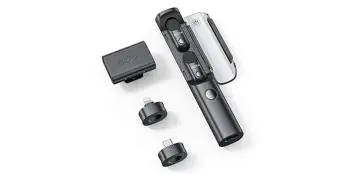
Travel creators benefit perhaps the most from this switch. The charging case, which acts as a portable power bank for the transmitters and receiver, ensures that the system is always ready. The ability to charge via USB-C means that specialized chargers are no longer necessary, allowing the kit to be powered by the same battery banks used for smartphones and laptops. This consolidation of gear is a significant advantage for those who prioritize a lightweight pack.
Shop the latest Cameras & Photography picks on Amazon.
Shop Amazon →Detailed Pros and Cons
Every piece of technology involves trade-offs. The Boya Magic is designed for a specific type of user, and while it excels in many areas, it is important to understand its limitations within the context of a professional production environment.
- Pro: Exceptional Portability - The miniaturized design allows the transmitters to be clipped directly onto clothing without weighing down the fabric or becoming a visual distraction on camera.
- Pro: Intuitive Input Control - The receiver features a clear, bright display that provides real-time visual feedback on gain levels, battery status, and signal strength, allowing for adjustments on the fly without digging through menus.
- Pro: Safety Track Feature - By recording a secondary track at a lower decibel level (-6dB), the system protects against sudden loud noises that might otherwise cause digital clipping and ruin the audio.
- Pro: Universal Compatibility - With included adapters for TRS, TRRS, and digital connections (lightning/USB-C), the Magic works seamlessly with DSLRs, mirrorless cameras, and smartphones.
- Con: 2.4GHz Limitations - Like all devices on this frequency, it requires a relatively clear line of sight. Turning a subject's back to the receiver at long distances can occasionally cause signal attenuation.
- Con: Built-in Battery Longevity - While the battery life is excellent for a day of shooting, the internal batteries are not user-replaceable, meaning the entire unit has a finite lifespan based on charging cycles.
- Con: Wind Sensitivity - The internal microphones are sensitive to wind noise. While "deadcat" windscreens are usually included, they are essential for even light outdoor breezes.
Comparing the Boya Magic to Industry Alternatives
When considering a switch to a new audio system, it is helpful to see how the specifications align with other common types of microphones used in the Cameras category. The following table provides a comparison between the Boya Magic (Compact Wireless), a traditional Lavalier (Wired), and a Shotgun Microphone (Camera-mounted).
| Feature | Boya Magic (Wireless) | Wired Lavalier | Shotgun Microphone |
|---|---|---|---|
| Mobility | High; no cables to camera | Low; tethered to device | Medium; requires proximity |
| Audio Security | On-board backup recording | Direct analog reliability | No backup; subject to room acoustics |
| Setup Time | Instant auto-pairing | Long; requires cable routing | Fast; mount and plug |
| Power Source | Internal rechargeable | Often passive or button cell | AA battery or Phantom Power |
| Best Use Case | Vlogging, Interviews, Events | Static Studio Interviews | Cinematic narrative, Run-and-gun |
Comprehensive Buying Guide
Choosing the right audio system requires an honest assessment of your production needs. The Boya Magic is a versatile tool, but before making the switch, consider the following factors to determine if it is the right investment for your specific camera rig.
Assess Your Environment
If you primarily film in controlled studio environments where you are no more than ten feet from the camera, a wired lavalier might provide a slightly lower noise floor for less money. However, if your work involves movement, walking-and-talking segments, or varying distances between the talent and the lens, the wireless freedom offered by the Magic is indispensable. Think about the frequency of "RF interference" in your area. In high-density cities, having a system with robust frequency hopping is a necessity.
Dual vs. Single Channel Needs
The Boya Magic is frequently sold in a 2-transmitter configuration. This is vital for creators who conduct interviews or host podcasts with a guest. Having two discrete audio channels allows you to mix each person's voice separately in post-production, which is critical if one person speaks significantly louder than the other. If you only ever film yourself, you might opt for a single-transmitter version, but the dual kit offers much better value for future-proofing your gear list.
Monitoring Capabilities
One of the most important aspects of professional audio is the ability to monitor the sound in real-time. Ensure your camera has a headphone jack, but even if it doesn't, the receiver of the Boya Magic often includes its own 3.5mm monitoring port. This allows you to hear exactly what the microphone is capturing before it even reaches the camera, preventing you from discovering "bad audio" only once you’ve returned to the editing suite.
Post-Production Workflow
Consider how much time you want to spend in the editing phase. Systems like the Magic often include built-in "Low-Cut" filters and "Noise Reduction" modes. While these can be helpful for beginners, professional editors often prefer "clean" audio to apply their own filters later. The Boya Magic strikes a good balance by offering these features as toggles, allowing users to choose between a "ready-to-upload" sound or a "professional-grade" raw file for complex sound design.
Shop the latest Cameras & Photography picks on Amazon.
See Deals →Technical Deep Dive: The Importance of Bit Depth and Sample Rate
For those interested in the technical minutiae, the Boya Magic typically operates at 24-bit/48kHz. In the world of digital audio, the sample rate (48kHz) determines the range of frequencies that can be captured, while the bit depth (24-bit) determines the dynamic range—the distance between the quietest and loudest sounds the mic can handle without distortion. Moving from 16-bit to 24-bit is a massive leap for video editors, as it provides much more "headroom" to boost quiet voices in post-production without introducing digital artifacts. This technical specification is one of the primary reasons professional users are comfortable switching to this compact system.
Durability and Long-Term Value
Camera gear lives a hard life. It gets tossed into bags, exposed to humidity, and occasionally dropped on pavement. The build quality of the Boya Magic is a significant step up from the "plastic-heavy" feel of entry-level wireless mics. The use of reinforced composites and high-quality connectors suggests that the system can handle the rigors of daily use. Furthermore, the inclusion of a specialized charging case does more than just provide power; it serves as a protective hardshell that keeps the delicate pins and screens safe during transport.
When evaluating "Value," one must look at the "Cost per Use." A cheaper microphone that fails during a critical shoot is infinitely more expensive than a reliable system that works every time. The Boya Magic sits in that "sweet spot" of the market: it is more expensive than the toy-like microphones found on discount sites, but significantly more affordable than the high-end systems used in Hollywood. For 95% of content creators, it provides diminishing returns to spend more, as the audio quality of the Magic already exceeds the compression limits of platforms like YouTube and Instagram.
The Psychological Impact of Better Audio
An often-underestimated result of switching to a high-quality system like the Boya Magic is the "confidence boost" it provides to the creator. When you know your audio is being recorded to an internal backup and you can see the levels bouncing on a bright screen, you stop worrying about technical failure and start focusing on the performance and the story. This shift from "techey-anxiety" to "creative-flow" is perhaps the most "magic" part of the switch. It allows for a more professional presence on set, which in turn leads to better performances from subjects and a more polished final product.
Furthermore, having professional-looking gear—even compact gear—changes the perception of your clients. Showing up to a paid shoot with a neat, organized charging case and professional-looking clip-ons sends a message of competence. In the business of photography and videography, perception is often as important as the gear itself.
Conclusion
Switching to the Boya Magic represents a transition into a more efficient, modern era of production. It acknowledges that while the fundamentals of good sound remain unchanged, the tools we use to capture it have become smaller, smarter, and more accessible. By combining high-resolution digital audio with a robust safety-net of on-board recording and an incredibly user-friendly interface, this system eliminates many of the traditional barriers to professional sound. Whether you are an experienced filmmaker looking to lighten your load or a burgeoning creator ready to move beyond your camera’s built-in microphone, the move to a specialized wireless system is one of the most effective upgrades you can make to your toolkit. The result is a more streamlined workflow, a more secure recording process, and, ultimately, a significantly higher quality of storytelling that resonates with audiences.