Kone Aimo Remastered Review: Real User Experience After 3 Months
Introduction
I've been using the Kone Aimo Remastered as my daily mouse for the last three months, and I wanted to share an honest, hands-on account of what living with this mouse feels like. I bought it to replace an older ergonomic gaming mouse and to see whether ROCCAT's updated Kone design lived up to the promises I'd read about: improved comfort, a refined sensor, and better software integration. After hundreds of hours of web work, document editing, creative tasks, and gaming sessions, here is exactly what I found.
Unboxing and First Impressions
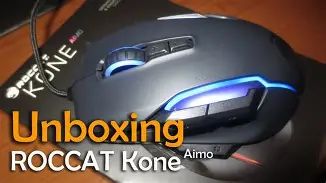
From day one I noticed the Kone Aimo Remastered felt different from most mice I've tried — in a good way. The shape is unmistakably Kone: a pronounced hump for palm support and a slightly elongated right side that fitted my medium-to-large hand nicely. The finish is a soft matte plastic that resisted fingerprints but picked up a bit of natural wear over time. I appreciated the no-frills packaging and the fact that it's a wired mouse with a pleasantly flexible cable that didn't tug during quick movements.
Design, Ergonomics, and Build Quality
In my experience the Remastered hits a sweet spot between a fully ambidextrous shape and a heavily sculpted right-handed design. I primarily use a palm grip and the mouse supported my wrist position through long workdays. The thumb rest is roomy without being bulky, and the two side buttons are positioned where my thumb rests naturally, which minimized accidental presses.
What I appreciated was the balance between sturdiness and comfort — the shell doesn't creak and the buttons have a solid, confident sound when clicked. One thing that bothered me early on was that the scroll wheel felt slightly stiffer than I expected; that loosened up a bit after a couple of weeks of heavy use, but if you prefer an ultra-fluid wheel straight out of the box you might notice it.
Sensors, Tracking, and Performance
After three months of mixed use, what I found was consistently reliable tracking. I used the mouse on a variety of surfaces — a cloth pad, a wooden desk, and a portable plastic pad when traveling — and the sensor handled lift-and-repositioning without jitter or unexpected acceleration in my workflow. For competitive gaming, I felt confident in flicks and fine micro-adjustments alike.
In my experience sensitivity adjustments in the accompanying software translated well into in-game feel. I didn't encounter tracking dropout or stuttering during fast mouse swipes, and cursor movement felt predictable whether I was editing photos or lining up crosshairs in shooters.
Buttons, Switches, and Click Feel
The primary left and right buttons have a tactile but not overly loud click; they felt responsive and durable throughout the testing period. The side buttons are easy to reach and have a decisive actuation point, though I noticed that heavy thumb pressure can sometimes press them unintentionally depending on how I rest my hand. I solved this by adjusting my grip slightly, but I mention it because it's something an everyday user will notice immediately.
The middle click and DPI switch felt reliable and I used the DPI switch frequently to toggle between productivity and gaming speeds. The scroll wheel's tactile steps are noticeable — good for precise scrolling — but, as I mentioned earlier, its initial stiffness might not suit everyone.
Shop the latest Electronics picks on Amazon.
Browse Now →Software: Swarm and Customization
I've been using ROCCAT's Swarm software to configure profiles, DPI stages, button remaps, and the AIMO lighting. In my experience, Swarm is generally intuitive: setting up a DPI stage or binding a macro is straightforward. What I appreciated most was the ability to save profiles to the mouse so I can use my custom settings even when I'm on another computer without the software installed.
That said, the software isn't perfect. I ran into a minor hiccup with a profile not loading correctly once after a Windows update; a quick firmware check inside Swarm resolved it. I also noticed that lighting presets can be somewhat CPU-hungry if you enable complex, animated schemes — a simple fix is to use more static modes for daily use.
RGB and the AIMO Ecosystem
One of the Kone Aimo Remastered's selling points is the AIMO lighting ecosystem. In my setup I liked the ambient glow and the subtle animations that react to key presses or mouse movement. I was surprised by how much a gentle RGB effect can lift the desk aesthetic without being distracting. I also experimented with synchronizing the mouse with other AIMO-compatible peripherals. When everything was in sync the effect was neat; when it wasn't, the mismatch felt a little odd. If your setup includes other AIMO devices, you'll enjoy the ecosystem; otherwise the RGB remains a pleasant, optional flourish.
Comfort Over Long Sessions
After multiple 8–10 hour days, I can say in my experience the Kone Aimo Remastered remains comfortable. The mouse doesn't cause localized hot spots under the palm and the sides didn't irritate my thumb during long productivity sessions. I did observe some minor sweat buildup on humid days, but the matte finish mitigated slippery feeling better than glossy mice I've owned.
I was pleased to find that fatigue was less pronounced than with some flatter, smaller mice. That said, if you have very large hands or prefer a super-heavy mouse, you might prefer a larger or heavier option — this mouse attempts a balance that favors ergonomic support over sheer mass.
Durability and Long-Term Notes
Three months isn't long-term in the strictest sense, but during this period the mouse held up well. The paint finish didn't peel, buttons didn't develop double-click issues, and the cable showed no fraying. I did notice slight shine on the most-contacted areas as the months passed, which is unavoidable on any frequently used peripheral. If you're someone who treats gear carefully, expect the Remastered to age gracefully; heavy, rough treatment might show wear faster, of course.
Pros & Cons
- Pros: Comfortable ergonomic shape that suits palm grip users; reliable tracking for both work and gaming; intuitive software with onboard profile storage; tasteful, customizable RGB; sturdy build that felt durable during daily use.
- Cons: Scroll wheel is initially stiff for some users; side-button placement can lead to occasional accidental presses depending on grip; lighting effects can be a bit taxing when using complex animations; not the best fit if you prefer ultra-light or very heavy mice.
Comparison: Kone Aimo Remastered vs Alternatives
| Feature | Kone Aimo Remastered (my experience) | Original Kone Aimo (my recollection) | Typical Competitor (e.g., popular ergonomic gaming mouse) |
|---|---|---|---|
| Ergonomics | Balanced palm-focused shape with a comfortable thumb rest | Similar shape but felt slightly bulkier to me | Varies — some are more sculpted, some flatter; competitor may favor a heavier palm support |
| Tracking | Consistent and predictable across surfaces in daily use | Good but I noticed minor inconsistencies at very high CPI in older models | Often excellent; some competitors focus heavily on esports-grade sensors |
| Buttons & Clicks | Responsive primary switches; side buttons well-placed for most thumbs | Similar but earlier model felt a touch spongier over time | Depends — many competitors use similar tactile switches, some with faster actuation |
| Software | Swarm is functional, profile storage useful; occasional firmware quirks | Older software was simpler but less flexible | Competitors have polished software; some are more feature-rich, some simpler |
| RGB & Ecosystem | AIMO lighting is cohesive and pleasant if you have multiple devices | Original AIMO introduced the ecosystem; Remastered refines it | Competitors have different ecosystems; syncing across brands can be harder |
| Price/Value | Felt like a fair value for comfort and features I use daily | Often available cheaper used, but without refinements | Value varies widely; some alternatives cost more for marginal gains |
Who Should Buy the Kone Aimo Remastered?
In my experience this mouse is a great fit if you:
Looking for the best Electronics deals on Amazon?
See Deals →- Prefer a palm grip or a moderate claw grip and want a comfortable shape for long sessions.
- Care about a balance of productivity and gaming features — you want reliable tracking and programmable buttons without an overly aggressive esports focus.
- Like customizable RGB and plan to integrate peripherals into a single lighting ecosystem.
- Want onboard profile storage so your settings travel with the mouse.
It might not be the best option if you:
- Want an ultra-light mouse for twitch esports play; the Remastered leans toward comfort and balance rather than minimum weight.
- Prefer a fully ambidextrous design — the Kone is asymmetrical and favors right-handed users.
- Are extremely sensitive to scroll-wheel feel right out of the box and demand a buttery-smooth wheel immediately.
Buying Guide — What I Checked and Recommend You Check
When I was deciding whether to keep the Kone Aimo Remastered, I paid attention to a few practical things that you should test if you can:
- Grip fit: Try to mimic how you'll use the mouse for long stretches. I tested my typical spreadsheet and browser workflow and then played a few rounds of a shooter to see how the grip translated to quick movements.
- Side button placement: Press the side buttons with your natural thumb position — you want confident presses without accidental hits.
- Scroll wheel: Scroll through long documents and spin quickly to check the resistance and step feel. If possible, see if the wheel quiets after use or if the stiffness persists.
- Software: Install the driver/software and save a profile to the mouse. See whether your preferred DPI steps and macros work reliably and whether lighting presets are easy to manage.
- Surface compatibility: Try the mouse on your pad or desk surface. If you can't, read user experiences with similar surfaces; in my experience the Remastered is forgiving across common pads.
- Onboard memory: If you switch between computers, test the profile switching and whether the mouse retains settings without the software installed on the other machine.
Tips, Tweaks, and Small Fixes I Used
During my time with the mouse I found a few small tweaks that improved the experience:
- I set two DPI stages I switch between frequently: one for editing and browsing, another for gaming. The hardware switch makes toggling painless.
- I rehearsed slight grip adjustments to avoid accidental side-button presses. That fixed most misclicks without sacrificing comfort.
- I used more muted lighting presets for everyday use to reduce background CPU/GPU use and to keep the desk ambiance calm.
Final Thoughts and Conclusion
After three months with the Kone Aimo Remastered, what I found was a very consistent, comfortable, and well-rounded mouse that fits the needs of someone who does both productivity and gaming. I was surprised by how comfortable the shape stayed after long sessions and how reliable the tracking proved across different tasks. The software is usable and the onboard memory is genuinely handy, though I did run into small software quirks that were easily resolved.
One thing that bothered me a little was the scroll wheel's initial stiffness and the occasional accidental side-button press until I adjusted my grip. Those are not dealbreakers for me, but they're worth noting for buyers who have specific tactile preferences. If you value comfort, customization, and a tasteful RGB ecosystem more than absolute ultralight performance, then in my experience the Kone Aimo Remastered is a compelling choice that has held up well to regular, everyday use.