The Ultimate Setup Guide for Your Puma Deviate Nitro Elite 4
Introduction
The arrival of the Puma Deviate Nitro Elite 4 marks a significant milestone in the evolution of performance running footwear. While traditionally categorized under athletic gear, the modern marathon racer has increasingly become a piece of high-end biomechanical equipment, often discussed in circles that appreciate precision engineering and material science. This guide treats the Deviate Nitro Elite 4 not merely as a shoe, but as a finely tuned instrument that requires specific "setup" and understanding to extract maximum performance. For the competitive runner or the enthusiast looking to shave seconds off a personal best, the way one integrates this footwear into their training ecosystem is as crucial as the hardware itself.
In the contemporary landscape of "super shoes," the Deviate Nitro Elite 4 stands out by balancing extreme energy return with a level of stability and ground feel that was often missing in earlier iterations of carbon-plated racers. The setup process involves more than just lacing them up; it requires an appreciation for the Nitro Elite foam's properties, the geometry of the PWRPLATE, and the specific maintenance required to keep the lightweight materials functioning at their peak. This article explores every facet of the Deviate Nitro Elite 4, providing an editorial deep dive into how to optimize this equipment for race day and high-intensity training sessions.
Detailed Product Analysis
At the heart of the Deviate Nitro Elite 4 is the latest iteration of Puma’s nitrogen-infused PEBA foam. Unlike standard EVA or even some hybrid foams, Nitro Elite is designed for maximum compression and immediate rebound. The "setup" starts with understanding that this foam has a "sweet spot" in terms of temperature and compression cycles. Early testers have noted that the foam performs most consistently after a brief "break-in" period of approximately 10 to 15 miles, which allows the cellular structure of the nitrogen-infused material to settle and reach its intended elasticity.
The carbon fiber PWRPLATE is the structural backbone of the shoe. In version 4, the plate geometry has been subtly refined to offer a more aggressive rocker profile. This design facilitates a faster transition from midfoot to toe-off, effectively reducing the workload on the calf muscles and Achilles tendon during high-speed efforts. However, this mechanical advantage comes with a learning curve. Runners transitioning from daily trainers or older racing models will find that the plate encourages a more forward-leaning posture. Setting up your running form to accommodate this shift is essential; it requires a focus on core engagement and a slightly higher cadence to stay "on top" of the plate’s energy return curve.
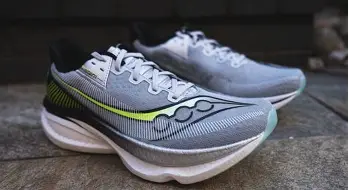
The upper of the Deviate Nitro Elite 4 is a masterpiece of minimalism. Constructed from a mono-mesh material that is both translucent and incredibly strong, it offers virtually no stretch. This is a deliberate design choice to ensure that the foot remains locked over the platform during aggressive cornering or rapid acceleration. Buyers typically care most about the "lockdown" quality, and the setup here involves precise lace tensioning. Because the material is so thin, over-tightening can lead to pressure points, while under-tightening can cause the foot to slide, negating the stability of the carbon plate. Finding the balance is part of the initial configuration process for every new owner.
Furthermore, the outsole features the PUMAGRIP WR compound. While "electronics" enthusiasts look for grip in their gadgets, runners look for it in their traction. The Deviate Nitro Elite 4 uses a thinner layer of rubber than a standard trainer to save weight, yet it maintains high-friction coefficients on both wet and dry asphalt. This makes the shoe a versatile tool for various weather conditions, though the setup should involve inspecting the outsole for wear periodically, as the thinness means the margin for error is smaller than in high-mileage trainers.
Real-World Use Cases
Understanding where the Deviate Nitro Elite 4 fits into a runner's "hardware stack" is vital. It is not intended for the casual recovery jog. Instead, it thrives in specific scenarios:
The Marathon Race Day: This is the primary use case. The cushioning is sufficient to protect the legs over 26.2 miles of hard pavement, while the plate provides the efficiency needed to maintain pace when fatigue sets in. The "setup" here involves pairing the shoe with technical socks that match the thinness of the mono-mesh upper to prevent internal slippage.
Shop the latest Electronics picks on Amazon.
See Deals →The Interval Session: For track workouts or road intervals, the shoe acts as a performance enhancer. The lightweight nature (often weighing under 7 ounces depending on size) allows for rapid turnover. In this context, users should focus on the "rebound" feel, using the shoe to calibrate their perception of effort at specific speeds.
The Tempo Run: A 10-mile sustained effort is the perfect way to test the shoe's thermal management. Because the upper is so breathable, it prevents heat buildup, which can be a limiting factor in long-duration high-output activities. The buyer should observe how their foot sits in the shoe after it expands slightly mid-run to ensure the lacing setup remains optimal.
Pros and Cons
- Pro: Exceptional Energy Return – The Nitro Elite foam is among the most responsive in the industry, offering a noticeable "bounce" that reduces the metabolic cost of running.
- Pro: Weight-to-Cushion Ratio – Achieving a high stack height while keeping the weight extremely low is a feat of engineering that benefits long-distance performance.
- Pro: Superior Traction – The PUMAGRIP rubber provides confidence-inspiring grip even on slick surfaces, a rarity in the carbon-plated category.
- Pro: Breathability – The ultra-thin mono-mesh upper ensures maximum airflow, keeping feet cool during intense efforts in warm climates.
- Con: Minimalist Protection – The focus on weight saving means there is very little padding in the tongue and heel, which may cause discomfort for those used to plush trainers.
- Con: Narrow Fit – The performance-oriented last is quite narrow, particularly in the midfoot, which may not accommodate runners with wider foot shapes.
- Con: Specialized Durability – Like all high-end racing equipment, the Deviate Nitro Elite 4 has a shorter lifespan than a standard shoe, usually optimized for 200-300 high-quality miles.
Comparison with Industry Standards
To understand the value proposition of the Deviate Nitro Elite 4, it is helpful to look at how its "specs" stack up against the broader market of elite racing footwear. The following table highlights the key technical differences that buyers often prioritize when selecting their "speed" setup.
| Technical Feature | Puma Deviate Nitro Elite 4 | Standard Racing Peer | High-Mileage Trainer |
|---|---|---|---|
| Foam Type | Nitrogen-Infused PEBA (Nitro Elite) | Standard PEBA | EVA or TPU Blend |
| Plate Material | Full-Length Carbon PWRPLATE | Carbon or Nylon Plate | No Plate/Torsion Bar |
| Upper Material | Mono-Mesh (Translucent) | Engineered Knit | Double-Layer Mesh |
| Weight (Avg Men's) | Approx. 195g | 210g - 230g | 280g - 310g |
| Grip Compound | PUMAGRIP WR | Lite Rubber | High-Abrasion Rubber |
The Buying Guide: Selecting and Setting Up Your Pair
When purchasing the Deviate Nitro Elite 4, the "buying guide" begins with sizing. Because the upper has zero stretch, there is no "breaking in" the fit of the fabric. If the shoe feels tight in the store, it will feel even tighter at mile 20 of a marathon when the foot naturally swells. It is generally recommended to have at least a thumbnail's width of space at the front of the shoe. This extra volume is part of the mechanical setup that prevents black toenails and compression injuries.
Another crucial factor is the gait analysis. The Deviate Nitro Elite 4 is a neutral shoe. While the carbon plate provides some inherent rigidity, it does not offer traditional stability features like medial posts. Therefore, buyers should be aware of their pronation patterns. Runners who moderately overpronate may need to "set up" their lower leg strength or use specific strengthening exercises to handle the high stack and soft foam, which can feel unstable at slower speeds.
Seasonality also plays a role in the purchase decision. Because the mono-mesh is so porous, this is an excellent choice for summer races or humid environments. However, for those planning to use it in extreme winter conditions, the setup must include thicker, moisture-wicking socks to compensate for the lack of insulation provided by the shoe's upper.
Maintenance is the final step in the setup guide. To preserve the integrity of the Nitro Elite foam, users should avoid storing the shoes in extreme temperatures, such as a hot car or a freezing garage. Extreme heat or cold can alter the chemical properties of the nitrogen-infused PEBA, potentially making it firmer or more brittle. After a run, removing the insoles (if possible) and air-drying the shoes away from direct heat sources ensures that the lightweight materials do not degrade prematurely.
Optimizing the Lacing and Lockdown
A common mistake in setting up the Deviate Nitro Elite 4 is using a standard lacing pattern without considering the shoe's unique geometry. Given the thinness of the tongue, the "Heel Lock" or "Runner’s Loop" is often necessary to prevent heel slippage without needing to overtighten the laces across the top of the foot. By creating a loop at the final two eyelets, the runner can secure the ankle firmly while leaving the midfoot laces slightly looser, allowing for better blood flow and comfort over long durations.
Find top-rated Electronics products at great prices.
View Offers →Users should also pay attention to the "PWRTAPE" reinforcements found on the upper. These are targeted strips of material designed to provide support where the foot needs it most. When setting up the shoe for a run, ensure your foot is centered directly over these zones. If you feel a "pulling" sensation on one side, it may indicate that the lacing is uneven or that your foot isn't seated correctly on the platform.
The Integration Process
Integrating the Deviate Nitro Elite 4 into a training program should be a staged process. This isn't a shoe you buy on Friday and race in on Sunday. A proper setup involves "calibrating" your body to the shoe's mechanics:
Phase 1: The Activation Walk. Wear the shoes around the house for an hour. This allows the foot to settle into the footbed and identifies any immediate pressure points from the mono-mesh seams.
Phase 2: The Short Strides. Take the shoes to a flat stretch of road and perform 4 to 6 strides of 100 meters. This introduces the carbon plate’s "pop" at high speeds without the risk of fatigue-related injury. It’s the time to test if your lacing setup holds under high force.
Phase 3: The Goal Pace Run. Execute a 5-mile run at your target race pace. This is the ultimate test of the shoe's "setup." Observe how your heart rate and perceived exertion levels compare to previous runs in standard trainers. Often, runners find they are moving faster than they realize, a hallmark of the Deviate Nitro Elite 1’s efficiency.
Conclusion
The Puma Deviate Nitro Elite 4 represents the pinnacle of current running technology, blending advanced chemistry with structural engineering. Treating it as a piece of high-performance electronics—requiring specific configuration, environmental awareness, and a methodical integration period—allows the user to unlock its full potential. By focusing on the nuances of lacing, being mindful of the foam’s properties, and understanding the aggressive nature of the PWRPLATE, runners can transform this footwear from a mere purchase into a vital component of their athletic success. The commitment to a proper setup ensures that on race day, the only thing the runner needs to focus on is the finish line, confident that their equipment is tuned to perfection.